
Welcome to the March issue of Blakes Competitive Edge, a monthly publication of the Blakes Competition, Antitrust & Foreign Investment group. Blakes Competitive Edge provides an overview of recent developments in Canadian competition and foreign investment law, including updates on enforcement activity by the Canadian Competition Bureau (Bureau), recent initiatives and key trends.
Key Highlights
- Merger review activity in 2026 is slightly down compared to last year, with the Bureau completing 35 merger reviews through the end of February, a 10% decrease from the 39 completed through February 2025. The proportion of merger reviews resulting in No Action Letters has risen to 71%, compared to 67% through February 2025.
- The Competition Tribunal (Tribunal) dismisses Google’s constitutional challenge regarding administrative monetary penalties for abuse of dominance.
- The Bureau reaches consent agreement with Chartwell Master Care LP in relation to its acquisition of retirement homes.
- The Bureau expands its investigation of real estate commission rules to include the Greater Vancouver REALTORS®.
Competition Act
Merger Monitor
February 1 – February 28, 2026 Highlights
- 13 merger reviews announced, 20 merger reviews completed, with reviews taking 33 calendar days on average
- Primary industries of completed reviews: manufacturing (25%); mining, quarrying, and oil and gas extraction (20%); retail trade (15%); construction (10%); transportation and warehousing (10%)
- 11 transactions received a No Action Letter (55%); 9 transactions received an Advanced Ruling Certificate (45%)
January – February 28, 2026 Highlights
- 36 merger reviews announced, 35 merger reviews completed, with reviews taking 33 calendar days on average
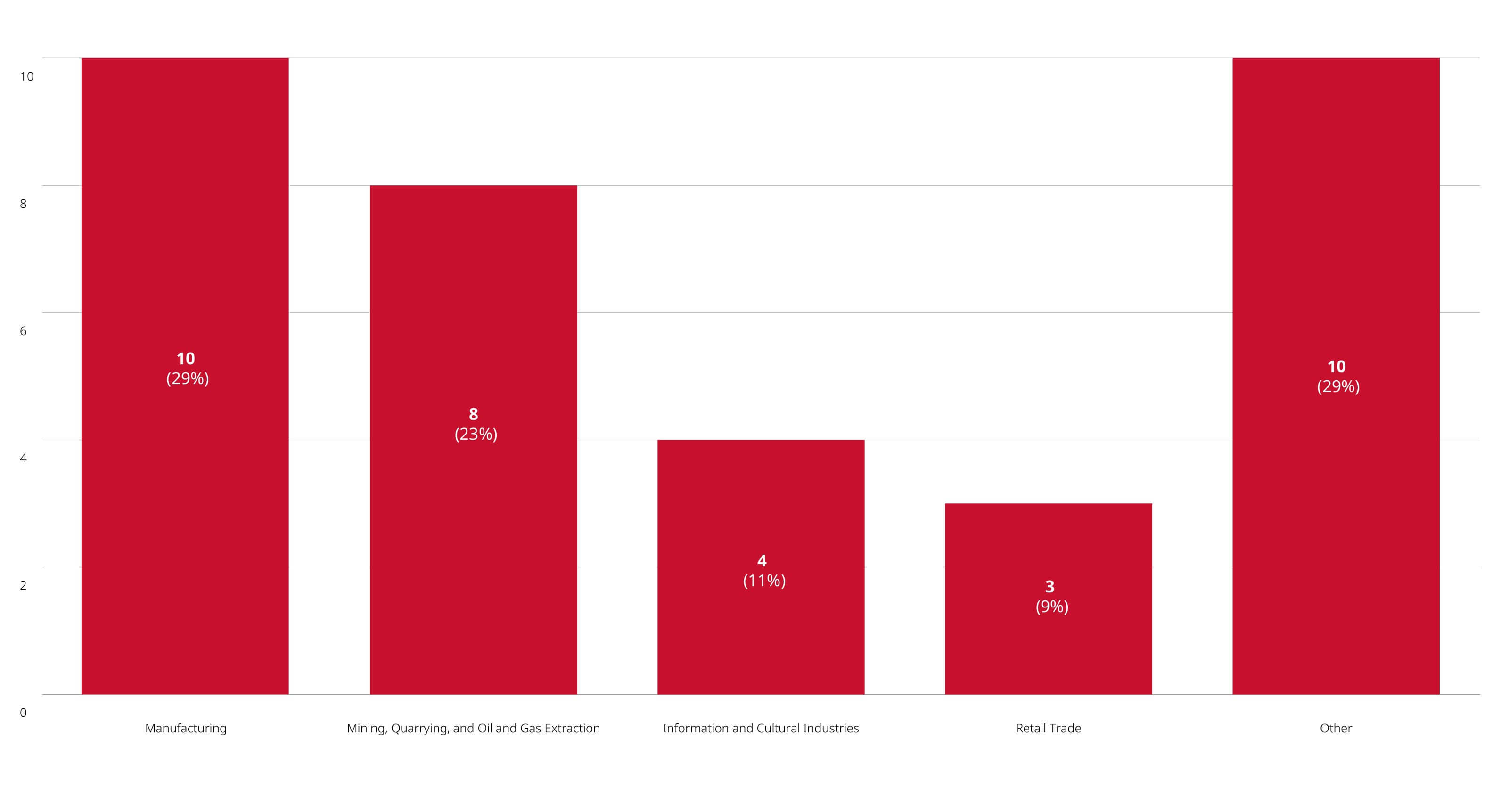
- Primary industries of completed reviews: manufacturing (29%); mining, quarrying, and oil and gas extraction (23%); information and cultural industries (11%); retail trade (9%)
- 25 transactions received a No Action Letter (71%); 10 transactions received an Advance Ruling Certificate (29%)
Merger Reviews Completed Year to Date Through February 28, 2026, by Primary Industry
Enforcement Activity
Tribunal Dismisses Google’s Constitutional Challenge of Administrative Monetary Penalty Provision in the Competition Act
- On March 3, 2026, the Tribunal released its decision dismissing Google’s constitutional challenge regarding administrative monetary penalties (AMPs) under the Competition Act (Act), which provide for a potential AMP of up to three times the value of the benefit derived from the anti-competitive practice, or, if that amount cannot be reasonably determined, 3% of the person’s annual worldwide gross revenues. Google argued that this provision, which could amount to billions of dollars, was a “true penal consequence,” triggering constitutional protections that were violated. The Tribunal cited the Supreme Court of Canada’s decision in John Howard Society in holding that Charter protections are available to those charged with criminal offences, not those subject to administrative sanctions. In John Howard Society, the Supreme Court confirmed that an infraction is a criminal offence if (i) the proceedings are criminal by their very nature, or (ii) a true penal consequence flows from the sanction. On the first prong, the Tribunal found that an abuse of dominance proceeding under the Act is analogous to a civil proceeding and lacked the features of a criminal proceeding, such as a charge and arrest. On the second prong, the Tribunal applied the four factors from the Supreme Court’s decision in Guindon for determining whether a monetary penalty is a “true penal consequence,” noting:
1. The magnitude of the AMP. The impugned provision provides a maximum, designed to enable the Tribunal to make an order that is proportional.
2. To whom the AMP is paid. The penalty is payable to the Consolidated Revenue Fund, but this factor is not given much weight.
3. Whether the AMP’s magnitude is determined by regulatory considerations rather than principles of criminal sentencing. The purpose of the AMP does not extend beyond deterrence to denunciation and punishment.
4. Whether stigma is associated with the AMP. Harm to a reputation or brand cannot be equated with stigma.
Ultimately, the Tribunal held that the fundamental purpose of safeguarding liberty was not engaged in a case concerned with financial penalties that may be ordered against “financially affluent corporations” for regulatory purposes.
Bureau Reaches Consent Agreement With Chartwell Master Care LP in Relation to Its Acquisition of Retirement Homes
- On March 12, 2026, the Bureau announced that it reached a consent agreement with Chartwell Master Care LP (Chartwell) relating to its proposed acquisition of six retirement homes from Sifton Properties Limited. The Bureau concluded that the transaction would likely result in a substantial lessening of competition among licensed retirement homes in the Kitchener-Waterloo area. The consent agreement requires Chartwell to sell its Clair Hills retirement home in Waterloo to an independent purchaser, to be approved by the Commissioner.
Bureau Expands Investigation of Real Estate Commission Rules to Include Greater Vancouver REALTORS®
- On February 20, 2026, the Bureau announced that it has expanded its investigation into whether the Canadian Real Estate Association’s (CREA) commission rules contravene the Act to include Greater Vancouver REALTORS® (GVR). The announcement came after the Bureau obtained a Federal Court order requiring GVR to produce information relevant to the Bureau’s investigation. The Bureau is seeking to determine whether the commission rules discourage buyers’ agents from competing by offering lower commission rates, encourage agents to steer buyers towards homes that offer higher commissions, and affect competition in other ways that could result in higher costs for buyers and sellers.
Non-Enforcement Activity
Merger Notification Thresholds Remain Unchanged in 2026
- On March 2, 2026, the Bureau announced that the threshold for requiring a pre-merger notification under the Act will remain unchanged at C$93-million, following a decision by the Minister of Industry. The transaction-size threshold has remained unchanged since it was reduced from C$96-million to C$93-million in 2021.
Bureau Responds to OSFI’s Public Consultation on its Draft Revisions to the Capital Adequacy Requirements Guideline (2027)
- On March 2, 2026, the Bureau made a submission in response to the Office of the Superintendent of Financial Institutions’ (OSFI) public consultation on its draft revisions to the Capital Adequacy Requirements Guideline. The Bureau’s submission focused on (1) OSFI’s proposed changes to the standardized approach for credit risk, and (2) the impact that certain prudential rules (i.e., regulatory standards in the financial sector) can have on competition between banks. On OSFI’s proposed changes, the Bureau claimed that some changes may reduce the capital burden for smaller banks (and, resultantly, their cost of lending), while others may increase competition in certain sectors where there are numerous smaller lenders. While not part of OSFI’s consultation, the Bureau also referred to previous OECD analysis and reforms in New Zealand and Australia in arguing that similar risks should face similar capital requirements, regardless of lender size or approach, to promote competition while maintaining stability.
Investment Canada Act
Innovation, Science and Economic Development Canada Releases its Annual Report on the Investment Canada Act
- On February 16, 2026, Innovation, Science and Economic Development Canada published its 2024–2025 Annual Report on the administration of the Investment Canada Act (ICA). The report provides fiscal-year statistics, including information regarding net benefit and national security reviews.
- The 2024 to 2025 fiscal year (from April 1, 2024 to March 31, 2025) saw 1,138 investment filings, a 5% decrease in the total number of investment filings that occurred in the 2023 to 2024 fiscal year. This marks the third-highest total number of investment filings and the second-highest in terms of value of investments, which totalled over C$132.5-billion. Of the 1,138 filings, 10 were applications for review approved as being of likely net benefit to Canada, and 1,128 were notifications certified as complete.
Investments by Sector
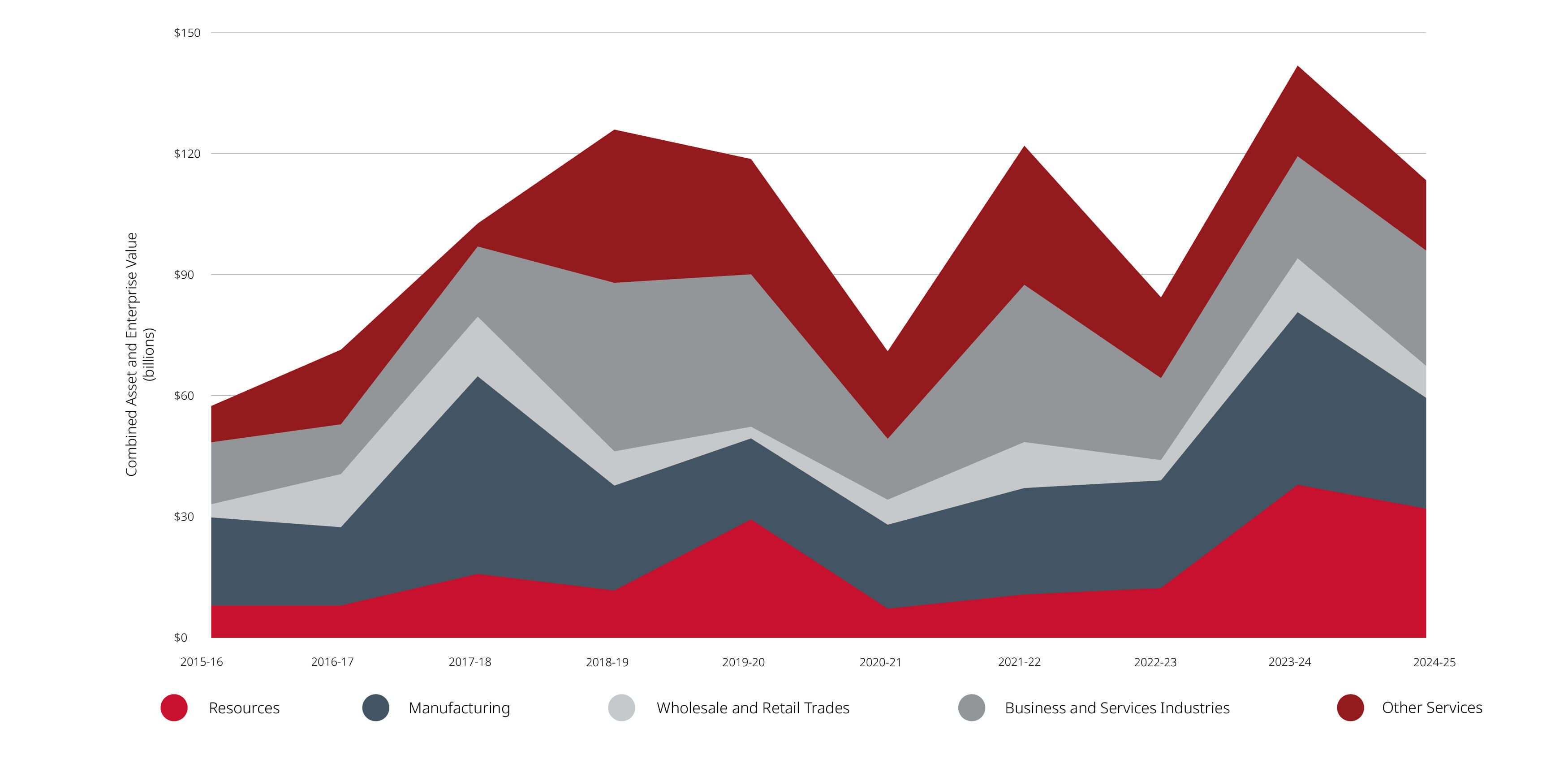
- The business and services industries (497 investments) category represented the greatest number of investments, representing a 4% decrease from the 2023 to 2024 fiscal year. Total investments decreased in resources (36 investments), manufacturing (210 investments), and wholesale and trade (129 investments), but increased in other services (266 investments).
Investments by Country of Origin
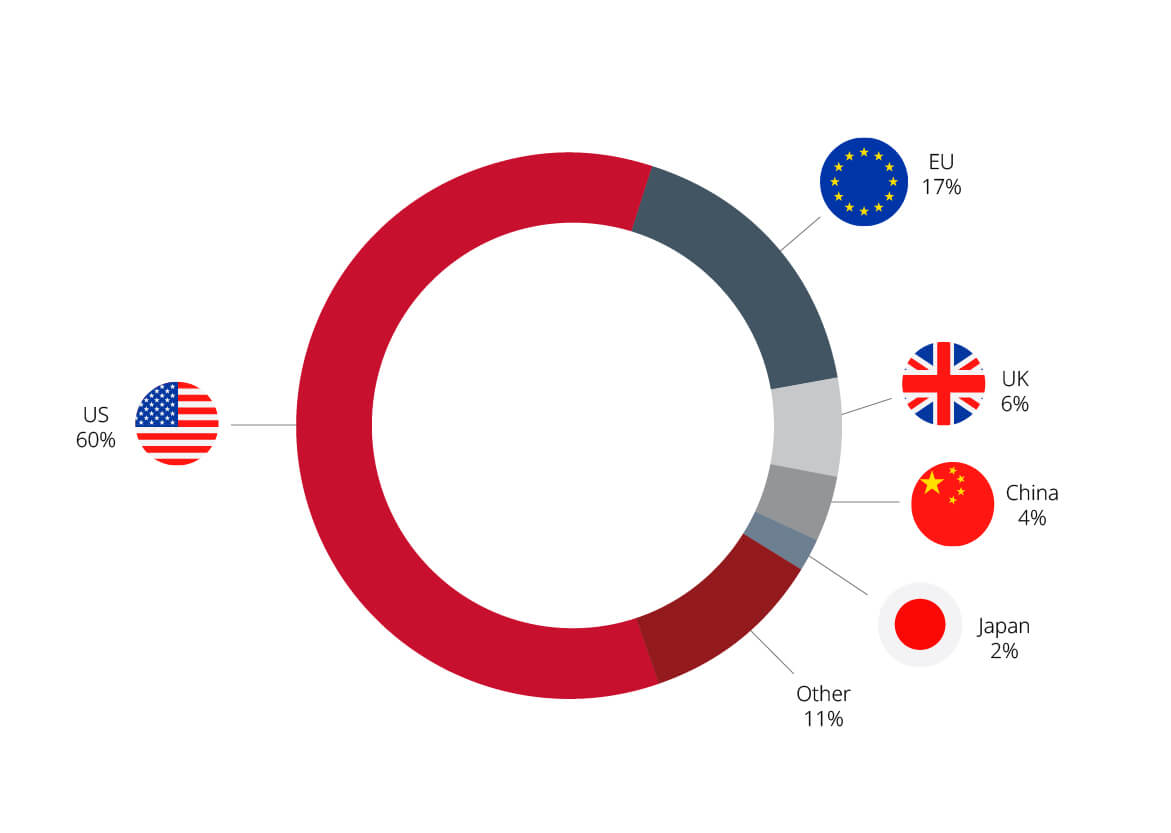
- The U.S. was by far the most significant foreign investor in Canadian businesses, with 687 investments originating from the U.S. (60.4%), accounting for 51.5% of the total asset value and 71.4% of the total enterprise value of investments. The U.S. was followed by the EU (21.8%) and the U.K. (5.6%), with the three regions collectively accounting for 949 filings or 83.4% of the total number of filings.
- The proportion of investments from China (including Hong Kong) increased to 3.9% of total investments (compared to 3.2% in the prior fiscal year).
- The primary target for investments was Ontario (584 investments, 51.3%), followed by Quebec (196 investments, 17.2%) and British Columbia (165 investments, 14.5%).
Results of Extended National Security Reviews
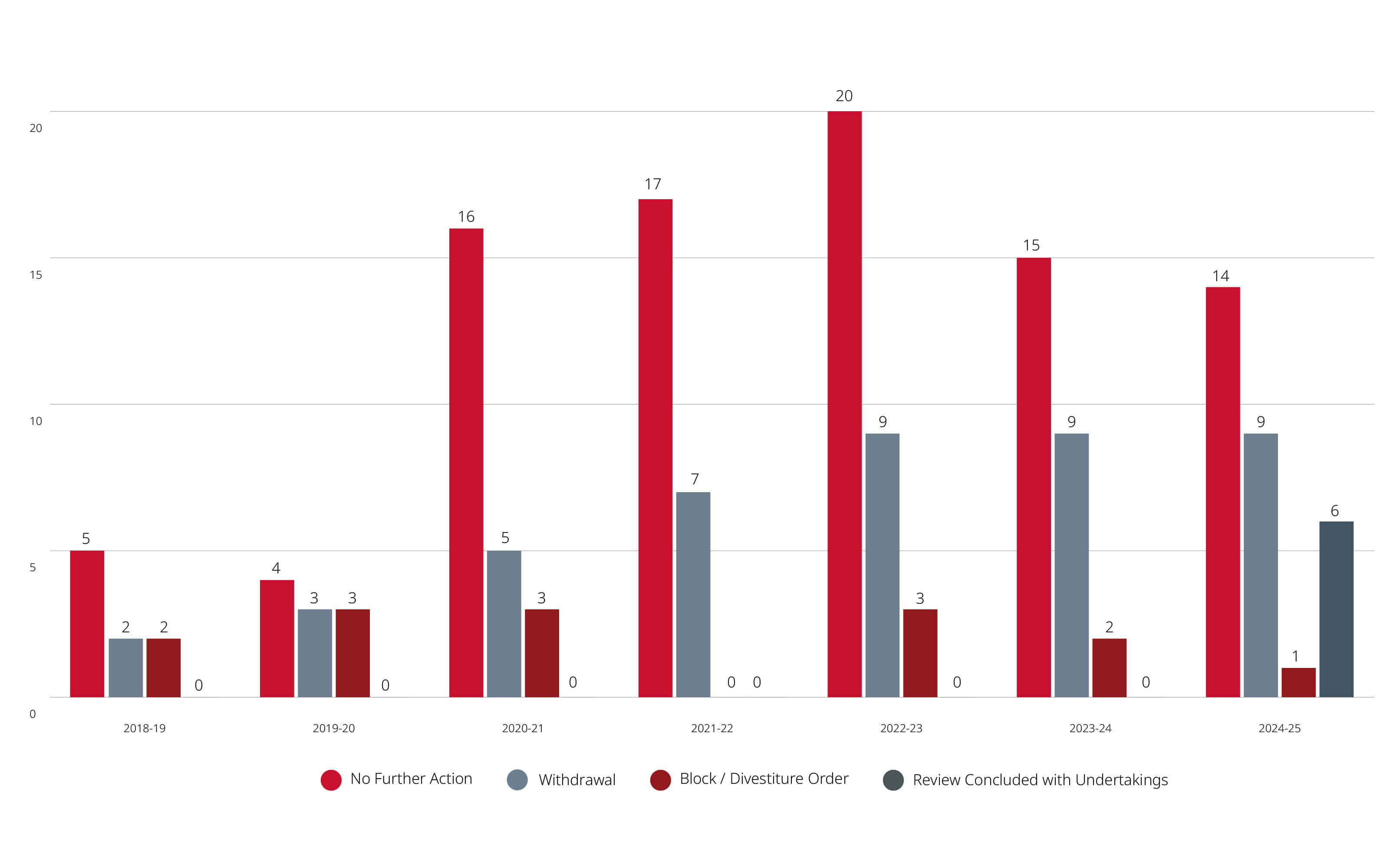
- Thirty investments were subject to an extended national security review, reflecting a 15.4% increase from the previous year’s 26, and the second highest in history. Of these 30 investments, one resulted in the Governor-in-Council issuing a final order directing the wind up of the Canadian business, six were permitted to proceed on the basis of undertakings (pursuant to amendments to the ICA that came into effect in September 2024 that allow the Minister of Industry to accept undertakings to resolve a national security review), nine were withdrawn and 14 were allowed to proceed without any further action.
- Unlike previous years, no specific industry was a key focus of national security reviews. Of the 16 orders for full national security review issued under Section 25.3 of the ICA, four related to manufacturing in various industries (chemical, pharmaceutical, communications equipment and motor vehicle parts). The average length of the extended national security review process was 155 days.
Foreign Investment Monitor
Cultural Investments
2025 Q4 Highlights
- 2 reviewable investment approvals and 4 notifications filed (3 filed for an acquisition, 1 for the establishment of a new Canadian business)
- Country of ultimate control: United States (67%); France (33%)
2025 Q1 – Q4 Highlights
- 5 reviewable investment approvals and 13 notifications filed (8 filed for an acquisition, 5 for the establishment of a new Canadian business)
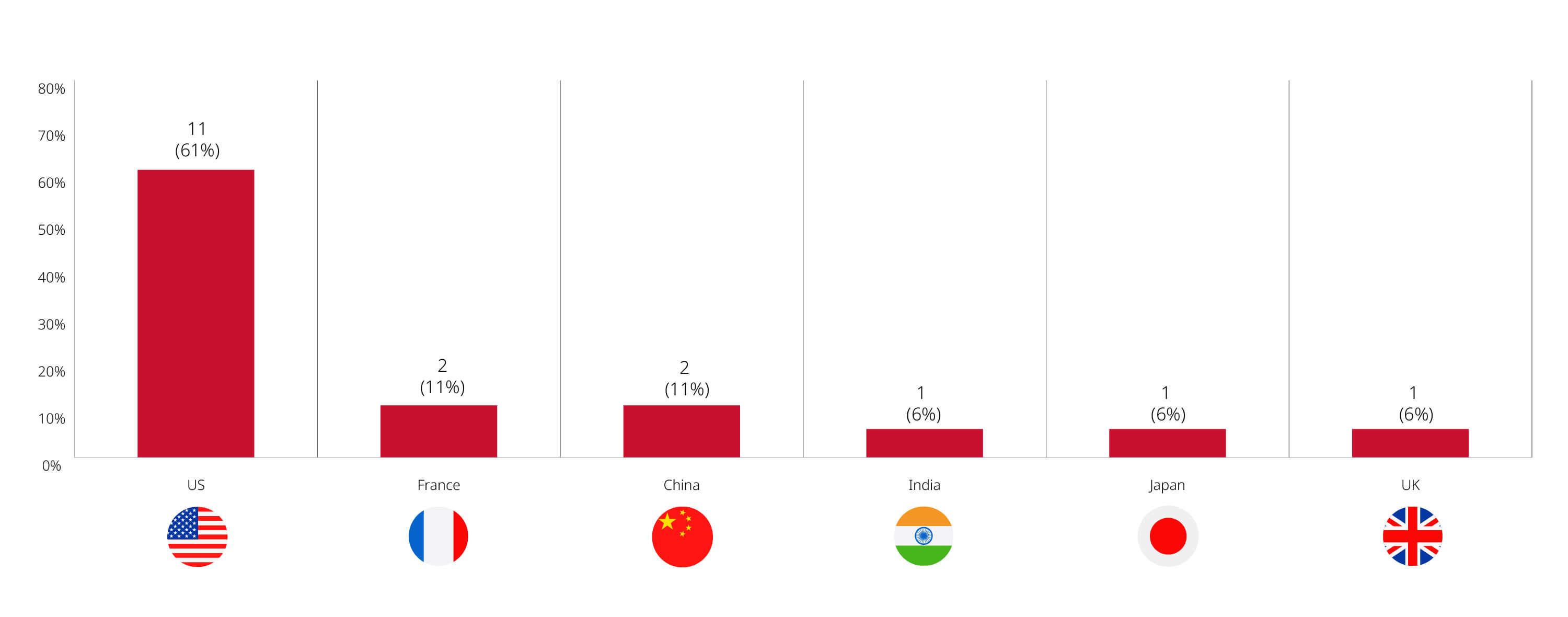
- Country of ultimate control: United States (61%); France (11%); China (11%); India (6%); Japan (6%); United Kingdom (6%)
Investment Canada Act Cultural Investment Filings and Approvals, January – December 2025
Non-Cultural Investments
January 2026 Highlights
- 3 reviewable investment approvals and 109 notifications filed (88 filed for acquisitions, 21 for the establishment of a new Canadian business)
- Country of ultimate control: United States (67%); France (6%); United Kingdom (5%); Pakistan (4%)
December 2025 Highlights
- 3 reviewable investment approvals and 92 notifications filed (72 filed for acquisitions, 21 for the establishment of a new Canadian business)
- Country of ultimate control: United States (54%); United Kingdom (7%); Pakistan (6%); France (5%)
January - December 2025 Highlights
- 9 reviewable investment approvals and 1038 notifications filed (815 filed for acquisitions, 223 for the establishment of a new Canadian business)
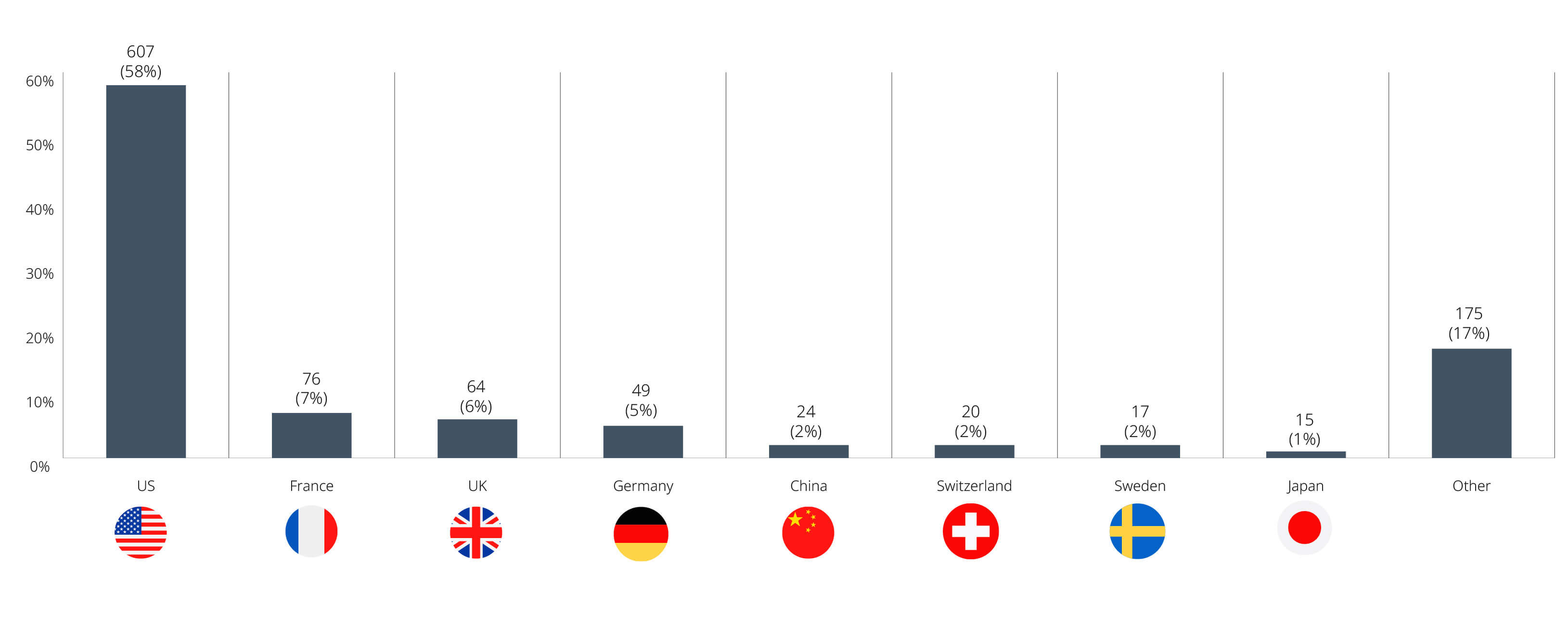
- Country of ultimate control: United States (58%); France (7%); United Kingdom (6%); Germany (5%); China (2%)
Investment Canada Act Non-Cultural Investment Filings and Approvals, January – December 2025
Blakes Notes
- On February 24, 2026, Blakes Partner Julia Potter hosted an episode of the Counterfactual Podcast as part of its “Better Know the Bureau” series. The conversation featured Jonathan Hood, Counsel at Competition Bureau Legal Services.
- On February 25, 2026, Blakes published Canadian Competition Law Outlook 2026: From Reform to Reality, a guide outlining how organizations can adapt their compliance strategies, assess new risks and position themselves for success amid a once-in-a-generation reset in Canadian competition law.
- On March 19, 2026, Blakes Partner Micah Wood will speak on “Compliance Across Borders: Antitrust Survival Skills” as part of a webinar hosted by TechLaw Group, Inc. Registration details are available here.
- On March 26, 2026, Blakes lawyers Julie Soloway and Robel Sahlu will moderate panels at the American Bar Association’s 2026 Antitrust Spring Meeting. Julie will moderate a panel on remedy negotiations in cross-border and sensitive transactions, while Robel will moderate a panel on merger review in a trade war. Visit the American Bar Association website for more information.
- Browse our thought-leadership insights from the Competition, Antitrust & Foreign Investment group to learn more.
Contact Us
If you have any questions, please do not hesitate to contact your usual Blakes contact or any member of the Blakes Competition, Antitrust & Foreign Investment group.